


Amazon Wants AI to Remember Your Conversations So You Don't Have To
Have you ever finished a conversation, walked away feeling everything was settled, and then realised you had forgotten an important detail?
Maybe someone asked you to send a document. A friend mentioned a place you promised to visit. During a meeting, your team agreed on three things you needed to do, but by the time you returned to your desk, you could only remember two.
Amazon believes artificial intelligence can help solve that problem.
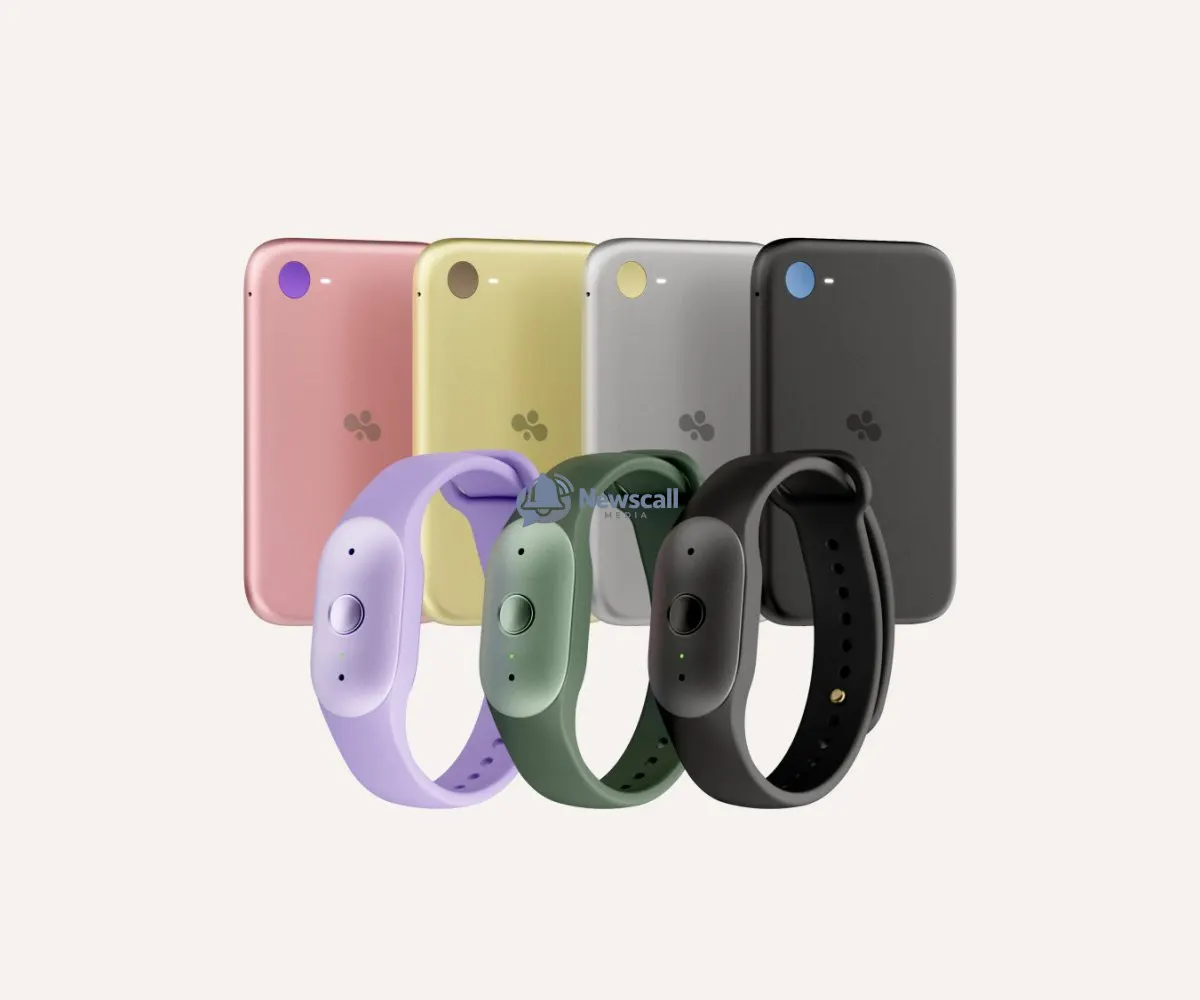
On October 15, 2026, the company introduced two new personal AI devices under its Bee brand: Bee Frontier, a wearable bracelet that can also clip onto clothing, and Bee Eclipse, a small accessory that attaches magnetically to the back of a smartphone.
Both devices are designed to capture useful information from everyday conversations, turn it into summaries and reminders, and help users remember things they might otherwise forget.
The idea sounds simple. Instead of stopping to take notes every time something important comes up, you can concentrate on the conversation and let AI handle the remembering.
But giving an AI assistant access to more of your everyday life also raises an important question: how much of your conversations are you comfortable allowing technology to process?
Two devices designed to remember your day
Bee Frontier is the wearable option. It can be worn around the wrist or attached to clothing using a clip. Amazon says it offers up to seven days of battery life, water resistance rated IP67 and dual microphones designed to capture speech in different environments.
The device costs $74.99 in the United States and is available in Onyx, Lavender and Sage.
Bee Eclipse takes a different approach. Rather than wearing it on your wrist, you attach the credit-card-sized device magnetically to the back of a compatible smartphone.
It costs $99.99 and is expected to become available soon, according to Amazon's announcement.
The two devices share the same basic purpose: helping users keep track of conversations, commitments and ideas without having to manually record every detail.
Think about a student listening to a lecture, a freelancer discussing a project with a client, or a worker leaving a meeting with several tasks to complete. An assistant that can summarise the discussion and identify the next steps could save time.
The technology could also help with everyday situations. If you discuss holiday plans with friends, for example, the AI might help you remember the agreed dates, arrangements and other details.
That is the promise behind personal AI: technology that does more than answer questions when you open an app. It becomes a tool that helps organise information from your daily life.
It does more than take notes
Conversation summaries are only part of Bee's pitch.
Amazon says users can connect the devices to services such as Gmail, Google Calendar and Microsoft Outlook. Depending on the features enabled, Bee can help identify action items, draft follow-up emails and create calendar invitations based on discussions.
The company is also introducing connections to Alexa+ and Amazon.com.
One example Amazon gives is forgetting that you need to buy something after mentioning it in conversation. With the relevant Amazon integration enabled, Bee can turn that passing remark into a shopping suggestion.
This is where the product becomes more interesting than a conventional voice recorder.
A recorder captures information. A transcription app converts speech into text. Bee aims to interpret that information and help users act on it.
There is a difference between reading a transcript of a meeting and receiving a list of tasks that need to be completed afterwards.
Of course, the usefulness of these features will depend on how accurately the AI understands conversations, distinguishes important details from casual remarks and produces reminders that people can trust.
An incorrect summary or a missed commitment could create problems of its own. Users will still need to check important information rather than assuming an AI-generated note is always correct.
The privacy question is difficult to ignore
For these devices to work as intended, they need access to conversations and other information users choose to connect.
That creates an obvious tension. The more an assistant knows about your activities, the more useful its recommendations may become. But giving technology access to more personal information also increases the importance of privacy, consent and control.
Amazon says Bee processes audio in real time and deletes it afterwards rather than storing the audio recordings. The company also says users control when the devices are activated, with a visible indicator light showing when they are processing audio.
According to Amazon, transcripts are encrypted and users can delete their summaries and other saved information. The service includes 14 days of memory at no additional cost, while a Bee Pro subscription, priced at $11.99 per month, unlocks additional features and integrations.
Those distinctions matter. Deleting audio after processing does not mean all information derived from a conversation disappears immediately. Transcripts, summaries and other saved records have their own retention and deletion arrangements.
There is another consideration: conversations involve other people, not just the person wearing the device.
Imagine discussing a private matter with a colleague who does not know an AI assistant is processing the conversation. Even if the device is designed with privacy controls, people around the user may have questions about whether their words are being captured.
Amazon says Bee Eclipse prompts users to obtain permission from call participants when recording a conversation. Users should still pay attention to consent requirements and applicable laws when using recording technology.
The important issue is not simply whether a company promises to protect data. It is whether people understand what is being processed, what is retained, who can access it and how they can control it.
Amazon is betting on a more personal kind of AI
Bee is part of a growing effort to move AI beyond chat windows and into devices people use throughout the day.
Instead of waiting for someone to type a question, personal AI products aim to work with information gathered from activities, conversations and connected services.
That approach could make technology more useful in ordinary life. It could help people manage busy schedules, reduce the effort involved in taking notes and remember commitments that might otherwise slip through the cracks.
However, usefulness alone will not determine whether people embrace these products. Price, battery life, accuracy, privacy and the willingness of others to participate in recorded conversations will all influence how well they fit into daily routines.
There is also the question of whether people want a device processing so much of their day in the first place. Some users may welcome an assistant that remembers everything important. Others may prefer to keep their conversations and personal routines separate from AI systems.
For now, Bee Frontier and Bee Eclipse offer a glimpse of the direction personal AI is taking. Amazon is not just trying to build an assistant that answers questions. It wants to create one that can help people remember what happened before they even think to ask.
The real test will be whether that convenience feels valuable enough to justify the technology's presence in everyday conversations.
Because remembering less might sound appealing. Deciding what technology should be allowed to remember about us is a much bigger question.

Victor Oluebubechukwu Akuma.
Creative writer