


White House guest list finally names Xi’s mystery security chief.
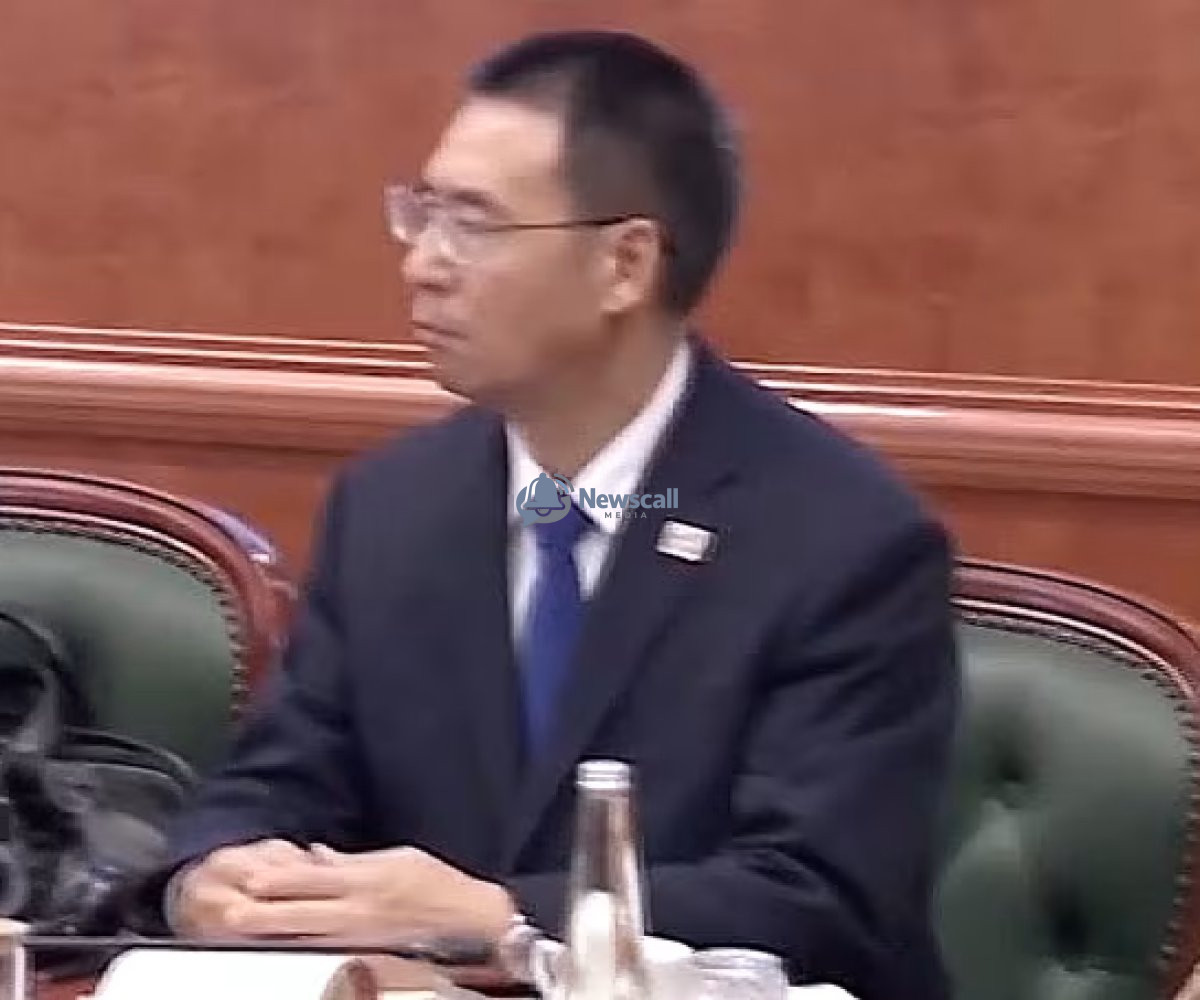
For years, China watchers kept noticing the same man at Xi Jinping’s shoulder. Glasses, short crew cut, always close, almost never identified. They believed he was Zhou Hongxu, director of the Central Guard Bureau the office that protects China’s top leaders the way the Secret Service protects an American president. Beijing never confirmed the title. His official biography was thin. State media footage showed him, then moved on.
That changed when the White House published the guest list for Donald Trump’s state banquet for Xi. There, in black and white, was Zhou Hongxu and his job. One diplomatic document did what years of grainy CCTV clips could not.
At the banquet he wore a buttoned up Mao suit and stood just behind Secretary of State Marco Rubio. Weeks earlier he had a similarly prominent seat when Xi met Narendra Modi in New Delhi, sitting between two Chinese vice foreign ministers. Official footage captured him; the captions still did not name him.
That kind of exposure is rare for a man whose job is supposed to stay in the shadows. Deng Yuwen, a former deputy editor at the party’s training school newspaper, said Zhou may be the first top security guard official to appear so openly in high stakes diplomacy. If Xi is putting him in the frame on purpose, Deng argued, it likely means greater responsibility and possibly a bigger role when the Communist Party holds its 21st National Congress next year and reshuffles key posts.
The Central Guard Bureau is one of the most secretive parts of China’s security machine. It protects leaders and the Zhongnanhai compound in central Beijing. State media once called it an “exceptionally unusual” organization that straddles police and military work and requires the deep trust of the top leadership. On paper it sits inside the Ministry of Public Security as “Bureau 9.” In practice it answers to Xi.
Zhou was chosen as a delegate to the 2022 party congress that gave Xi a third term. Older clips show him behind Xi at a 2019 summit in Nepal and at APEC in San Francisco in 2023. In 2018 he appeared in military uniform with his predecessor, Wang Shaojun, during Xi’s inspection of the PLA’s Northern Theater Command. Wang died in April 2023; state media confirmed his title only months later and never named a successor. Until the White House list, neither had they named Zhou.
Almost nothing public exists about Zhou’s education or earlier career. That silence is now standard for people who serve Xi directly. Other younger officials at the banquet foreign ministry spokesperson Mao Ning, 53; protocol chief Hong Lei, 57; and Xi’s personal secretary Lu Luhua also signal a generation that may move up as many current heavyweights approach 70.
Zhou remains a black box at home. Abroad, he is no longer invisible. His sudden visibility is less about protocol than about who Xi wants the world and the party to see standing next to him as the next congress approaches.
Umeanozie Prosper
Writer, Novelist,blogger, content creator


