

MTN NIGERIA BEGINS AIRTIME COMPENSATION FOR CUSTOMERS AFFECTED BY NETWORK OUTAGES
MTN Nigeria has begun automatically crediting customers with airtime bonuses as compensation for service disruptions that affected users between November 2025 and January 2026, following a directive from the Nigerian Communications Commission (NCC).
This marks one of the most visible consumer compensation efforts in Nigeria’s telecommunications sector in recent years, as regulators increase pressure on operators to improve service quality and customer experience.
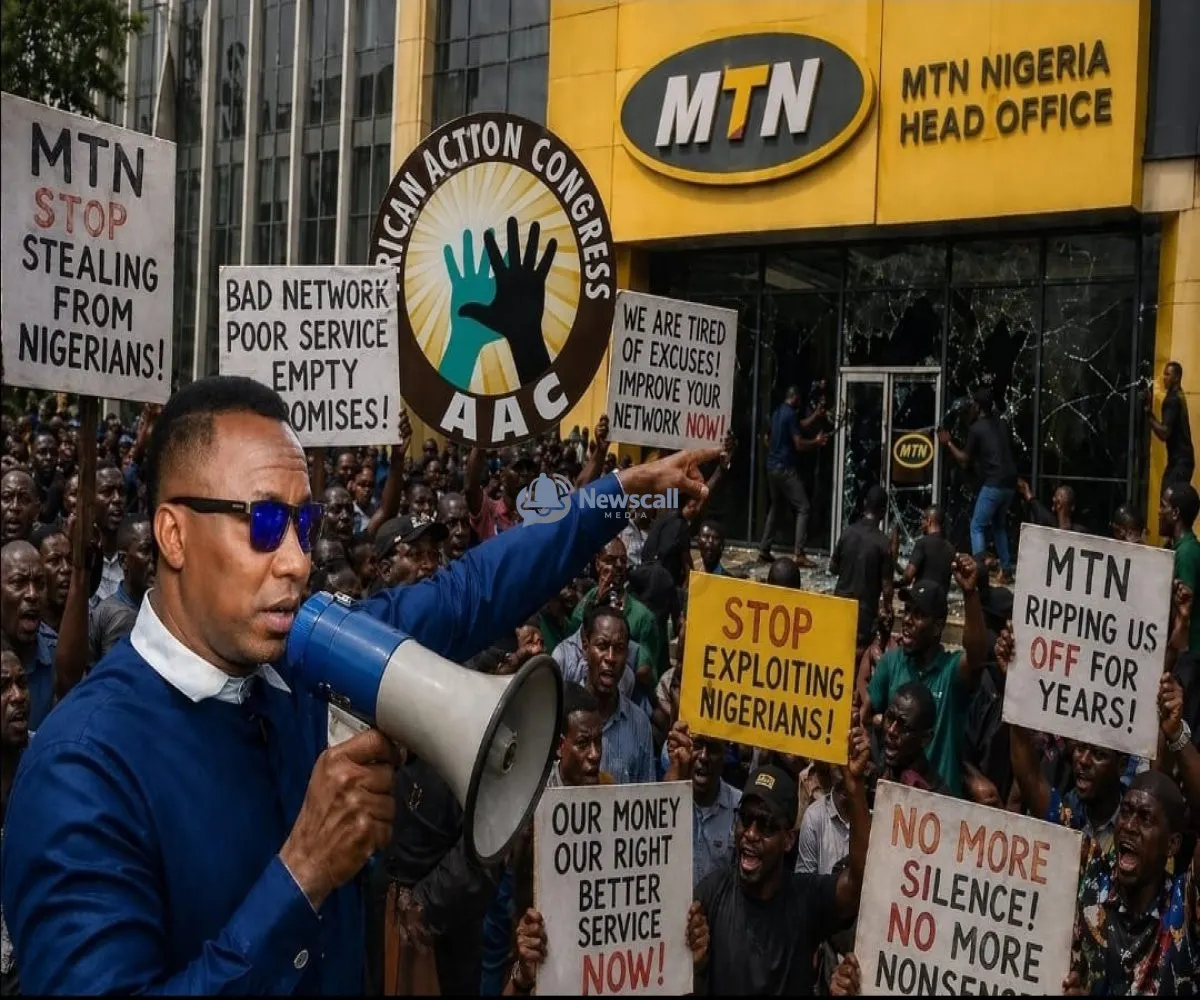
The issue gained visibility after Sowore staged a protest outside MTN’s Lagos headquarters on April 24, giving the company a seven-day ultimatum to overhaul billing systems and improve customer treatment.
According to information circulating among subscribers, the credits are being distributed directly to eligible customer lines without the need for formal complaints or applications. Amounts received appear to vary depending on customer usage levels, spending patterns, and the degree of disruption experienced in different locations.
Some users reported receiving relatively small credits, including sums such as ₦91, while others said they received larger amounts. Public attention intensified after activist said he received ₦341 despite claiming to have lost ₦55,000 on a failed data plan during a network outage.
The compensation exercise follows months of complaints from subscribers over dropped calls, poor voice quality, delayed messages, and slow or unavailable internet access. Many users had expressed frustration over recurring disruptions, particularly during periods of high network traffic and digital demand.
The NCC had earlier warned telecom operators to meet minimum quality-of-service standards or face regulatory consequences. Under industry rules, operators are expected to maintain acceptable benchmarks for call completion, network availability, and data performance.
MTN Nigeria confirmed compliance with the regulatory directive on April 23 and said it had initiated customer remediation measures. The company also stated that it is investing in network modernization and expansion to address congestion, outages, and rising demand for data services.
Industry analysts say the compensation program could set an important precedent for consumer rights in Nigeria’s telecom market. While refunds and bonuses have occasionally been issued in isolated cases, sector-wide automatic compensation tied to service quality complaints remains uncommon.
The development has also reopened broader questions about transparency in telecom billing and outage accountability. Consumer advocates argue that subscribers often bear the cost of failed calls, interrupted data sessions, or unusable subscriptions with limited channels for redress.
On social media, reactions to the MTN compensation were mixed. Some subscribers welcomed the gesture as a sign that customer complaints were being taken seriously, while others criticized the credited amounts as too small to match the inconvenience or financial losses they experienced.
Telecommunications experts note that Nigeria’s mobile networks are under increasing pressure as smartphone adoption, video streaming, fintech transactions, remote work, and online learning continue to drive sharp growth in data consumption.
As the country’s largest mobile operator by subscriber base, MTN Nigeria plays a central role in the national digital economy. Any prolonged service disruption can affect businesses, banking transactions, education, logistics, and personal communication across millions of users.
Whether the current compensation effort restores consumer confidence may depend less on the airtime bonuses themselves and more on whether subscribers see lasting improvements in network reliability over the coming months.
For now, the automatic credits signal a stronger regulatory stance: telecom operators may increasingly be expected not only to explain outages, but also to compensate customers when service standards fall below required levels.

CHIBUNDU CHRISTIAN UGONNA
Media Writer , and content creator with a strong focus on strategic communication, public relations, and audience engagement.