


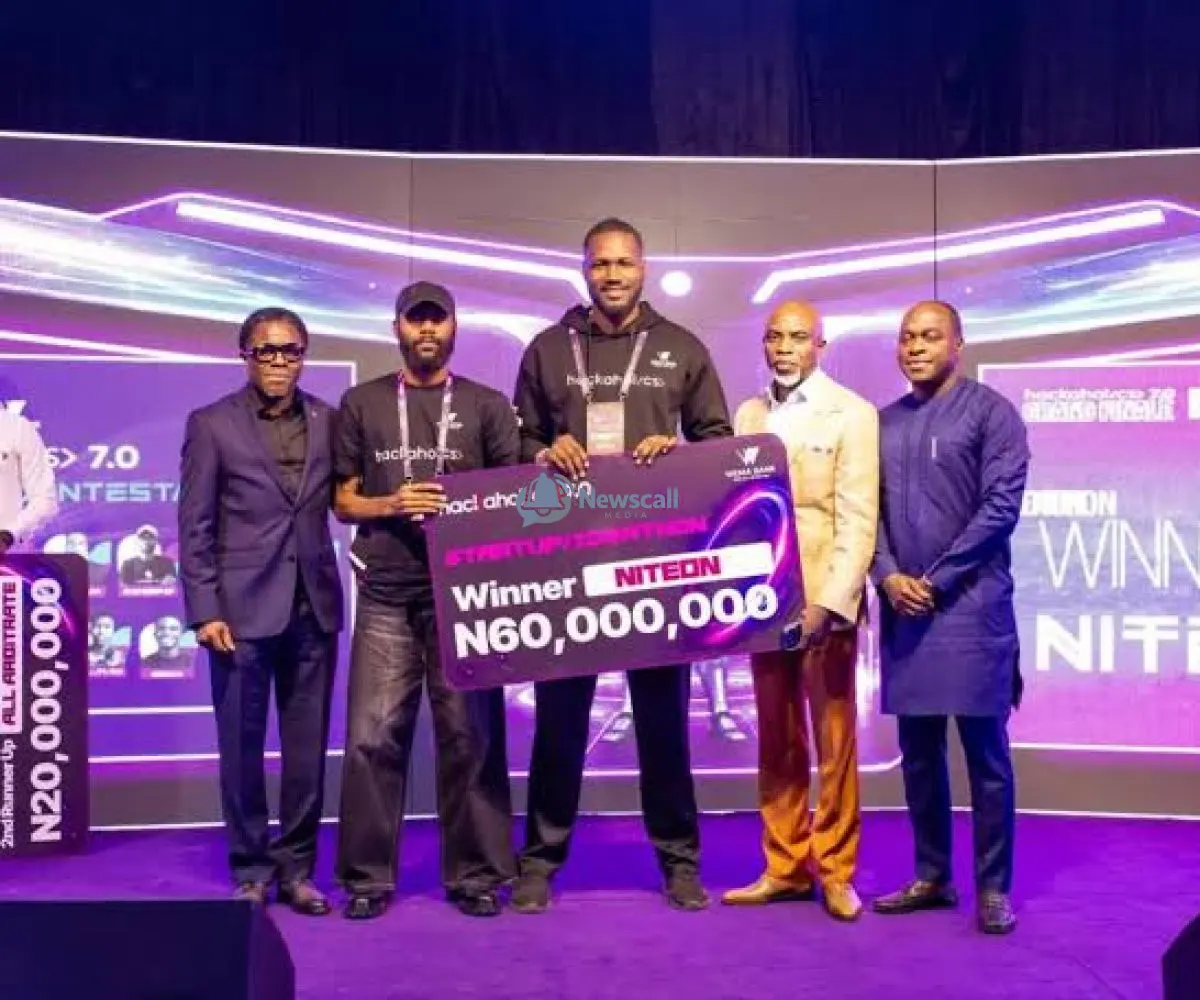
Wema Bank Awards ₦300 Million to 11 Nigerian Innovators at Hackaholics 7.0
Eleven Nigerian innovators have received a combined ₦300 million in awards and funding support from Wema Bank following the seventh edition of its Hackaholics innovation programme in Lagos.
The awards were presented at the grand finale on November 6, 2026, under the theme Festival of the Future. The winning teams developed solutions spanning agriculture, healthcare, education, environmental sustainability, artificial intelligence and digital accessibility.
The overall winner was Tony Niteon Nwose, founder of Niteon, who received the ₦60 million grand prize for an agricultural technology platform designed to connect farmers with processors, financial services and market opportunities.
The platform addresses a challenge that goes beyond agricultural production. Farmers also need access to buyers, financing and reliable routes to market. By bringing some of these services together digitally, Niteon aims to help farmers participate more effectively in agricultural value chains.
Another business recognised for addressing a practical economic challenge was Craft Planet. Founded by Kabir Olaosebikan, the company received ₦40 million for developing sustainable building materials from plastic waste.
The idea connects two problems: plastic pollution and the demand for construction materials. Rather than allowing plastic waste to accumulate in the environment, the innovation seeks to turn it into materials that can be used in construction.
In the Startup/Ideathon category, Emmanuel Adeboje of Acceede received ₦40 million for an education-focused innovation. David Lawani of All-Arbitrates received ₦20 million for a digital platform designed to improve access to arbitration and dispute resolution.
The two solutions operate in different sectors, but both focus on making existing services more accessible through technology. Digital education tools can help address learning challenges, while online dispute-resolution platforms could make it easier for individuals and businesses to navigate disagreements.
Healthcare and social inclusion also featured prominently among the winners.
Zainab Boluwatife Adeagbo of MamaAlert received ₦20 million in the Women-Led category for a digital healthcare solution intended to improve women's access to timely healthcare services.
In the same category, Precious Zino of URI received ₦10 million for an artificial intelligence-powered marketing solution designed to help businesses improve customer engagement and strengthen their digital presence.
The Social Impact category recognised two other innovations.
Samuel Ayomide Shonubi of SocialSign received ₦30 million for technology designed to improve communication through sign language. Solutions of this kind could help reduce communication barriers for people with hearing impairments, particularly when accessing services that do not routinely provide sign-language support.
Oluwaseyi Whyte Akinlolu of Harthio received ₦20 million for a mental wellness solution, highlighting another area where technology companies are attempting to improve access to services.
Artificial intelligence was also prominent in the Hackathon category, where three innovators received awards for their technology-driven solutions.
Kelvin Nnadi of Neural Forge won ₦30 million for an AI-powered medical diagnostic innovation. David Campbell of Nexa AI received ₦20 million for a customer intelligence solution designed to help businesses understand customer interactions and identify useful insights.
Uti Henry of Vhorde received ₦10 million for IRIS, an AI-powered smart glasses innovation designed to help visually impaired people navigate their surroundings more independently.
Together, the 11 awards show how Nigerian entrepreneurs are applying technology to problems beyond the conventional startup categories of payments, online shopping and financial services.
The projects range from helping farmers reach markets to turning discarded plastic into building materials, improving healthcare access and developing assistive devices.
The competition attracted 5,329 participants and generated 1,632 ideas and proposed solutions across seven pitch centres in Uyo, Kano, Yaba College of Technology, Benin, Ibadan, Enugu and Lagos.
After the nationwide selection process, 59 participants emerged, with 21 finalists eventually shortlisted to compete across four categories: Startup/Ideathon, Social Impact, Women-Led and Hackathon.
This nationwide structure makes Hackaholics more than a single event where a handful of founders pitch for money. It gives innovators from different locations an opportunity to present ideas, compete, gain exposure and potentially build relationships within the technology and business ecosystem.
Hackaholics was launched in 2019. Wema Bank says that across its seven editions, the programme has recorded more than 21,000 applicants, engaged over 50,000 participants, supported more than 10,000 startups across three countries and contributed to the development of over 100 solutions.
These are programme-wide figures reported by the bank. They should not be interpreted to mean that every participating startup received direct investment or became a commercially successful business.
That distinction matters when evaluating the impact of innovation competitions. Winning an award can provide money to improve a product, hire employees, test a business model or reach more customers. But funding alone does not guarantee that a startup will survive or become profitable.
The next challenge for these 11 teams will be turning recognition and financial support into sustainable businesses.
For Niteon, that could mean expanding its agricultural platform and strengthening connections between farmers and buyers. For Craft Planet, it could involve increasing production capacity and finding larger markets for its building materials. For the healthcare, accessibility and AI businesses, the challenge will include demonstrating that their solutions work reliably and attracting users who need them.
Wema Bank's ₦300 million commitment gives the selected innovators additional resources to pursue those goals. It also highlights the role established institutions can play in supporting businesses that may not yet be large enough to attract conventional investment.
Nigeria has no shortage of people developing ideas to solve practical problems. The more difficult task is helping those ideas become products, businesses and services that can reach the people who need them.
Hackaholics 7.0 has identified 11 teams working on different parts of that challenge. Their progress beyond the competition will show how far the support can take their innovations.

Victor Oluebubechukwu Akuma.
Creative writer