


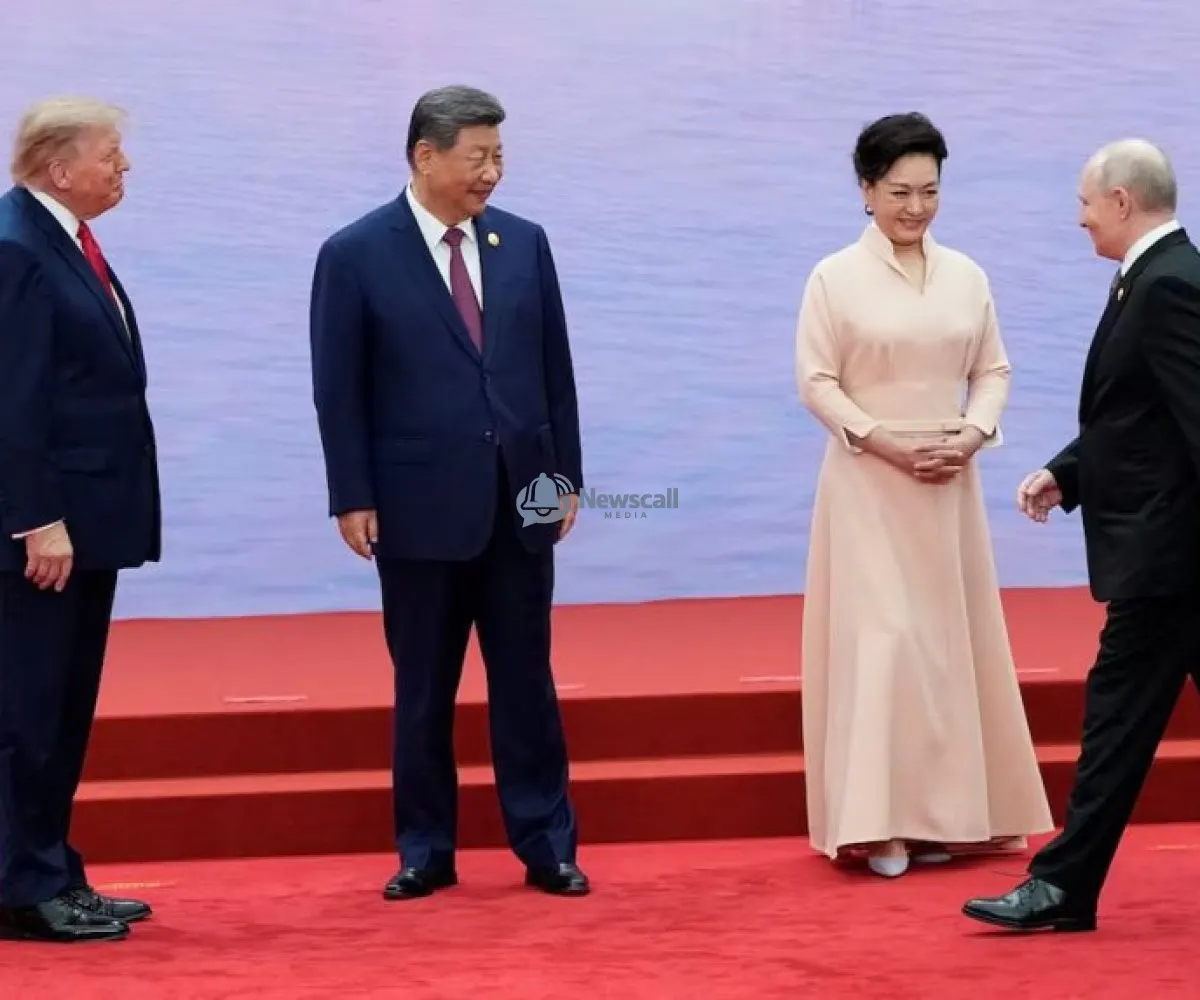
Xi, Putin Warn Trade Barriers Could Hurt Developing Economies as Trump Heads to APEC Talks.
Chinese President Xi Jinping and Russian President Vladimir Putin have warned that rising trade barriers, economic sanctions and the emergence of rival economic blocs could have serious consequences for smaller and developing economies.
Their comments came as U.S. President Donald Trump arrived in Shenzhen, China, on Wednesday ahead of a high-level meeting with Xi and Putin on the sidelines of the Asia-Pacific Economic Cooperation (APEC) summit.
The three leaders are expected to meet on Thursday, with trade and artificial intelligence likely to feature prominently in their discussions. Their meeting is being closely watched by governments across Europe and Asia, many of which are concerned that the interests of smaller economies could be overlooked as the world's major powers negotiate their economic and strategic priorities.
Speaking at a business forum, Xi called for greater international cooperation and urged countries to maintain free and open trade and investment under the framework of the World Trade Organization (WTO).
He said the global economy was struggling to maintain momentum as countries increasingly adopted policies that prioritized their own interests and erected trade barriers.
Xi also announced that China would continue lowering tariffs and opening its markets, while making efforts to improve regulations and create more predictable conditions for foreign businesses and investors.
However, tensions remain between Washington and Beijing. New U.S. restrictions on Chinese companies' access to advanced semiconductor chips used in artificial intelligence could put pressure on the current trade truce between both countries. China has indicated that it could respond with retaliatory measures.
Putin, meanwhile, criticized Western sanctions imposed on Russia over the war in Ukraine. He argued that sanctions, tariffs and export restrictions had failed to prevent economies from developing, pointing to Russia's ability to withstand the pressure.
According to Putin, restricting one part of a global supply chain ultimately increases costs for other countries and businesses. He called for stronger trade and investment relations between Russia and countries in Asia, the Middle East and Africa, while promoting deeper economic integration across Eurasia.
The World Trade Organization has warned that developing countries could suffer disproportionately if global trade becomes divided into competing geopolitical blocs.
A 2026 WTO report estimated that global economic output could fall by 5.1 percent and global exports by 18.6 percent by 2050 if international cooperation weakens significantly.
The report further warned that small and poor economies could experience losses more than three times greater than those suffered by high-income countries because they depend heavily on international markets and have less influence over global trade rules.
Changes in supply chains and restrictions on technology transfers could also increase production and transportation costs, particularly for countries that rely on imported energy, raw materials and manufactured goods.
However, experts say the changing global trade environment could create opportunities for some developing countries to attract new investment. To benefit, these nations would need reliable infrastructure, stable investment policies and stronger technical and industrial capacity.
As Trump, Xi and Putin prepare to meet, their discussions could therefore have consequences far beyond the three countries, particularly for developing economies seeking greater access to markets, investment and technology.

Umeanozie Prosper
Writer, Novelist,blogger, content creator